
Information Architecture
A consistent structure for product knowledge
XDocs DITA CCMS helps information architects configure the taxonomies, metadata, content rules and publishing profiles that guide structured content across the organization.
See XDocs in action- Define taxonomies
- Configure metadata
- Enforce content rules
- Manage output profiles
01 / Taxonomy and metadata
Give content a shared vocabulary
Configure taxonomies, metadata properties and values for use across authoring, reviews, content management, localization, release management and delivery.
Adapt these configurations when your content strategy changes.
02 / Schemas and validation
Make content rules part of the process
Set up specialized schemas and Schematron rules to enforce content requirements for system users.
Reconfigure schema and Schematron files as your strategy evolves.
03 / Content reports
Turn content audits into focused queries
Create specialized reports that query technical documentation and its metadata.
Find, display, count or perform other operations on selected content sets to respond to audit questions.
04 / Content profiles
Support the outputs your audiences need
Configure profiles for product lines, publication types, OEMs or value-added resellers.
Use conditional processing, presentation configuration and publishing plugins to manage different outputs.
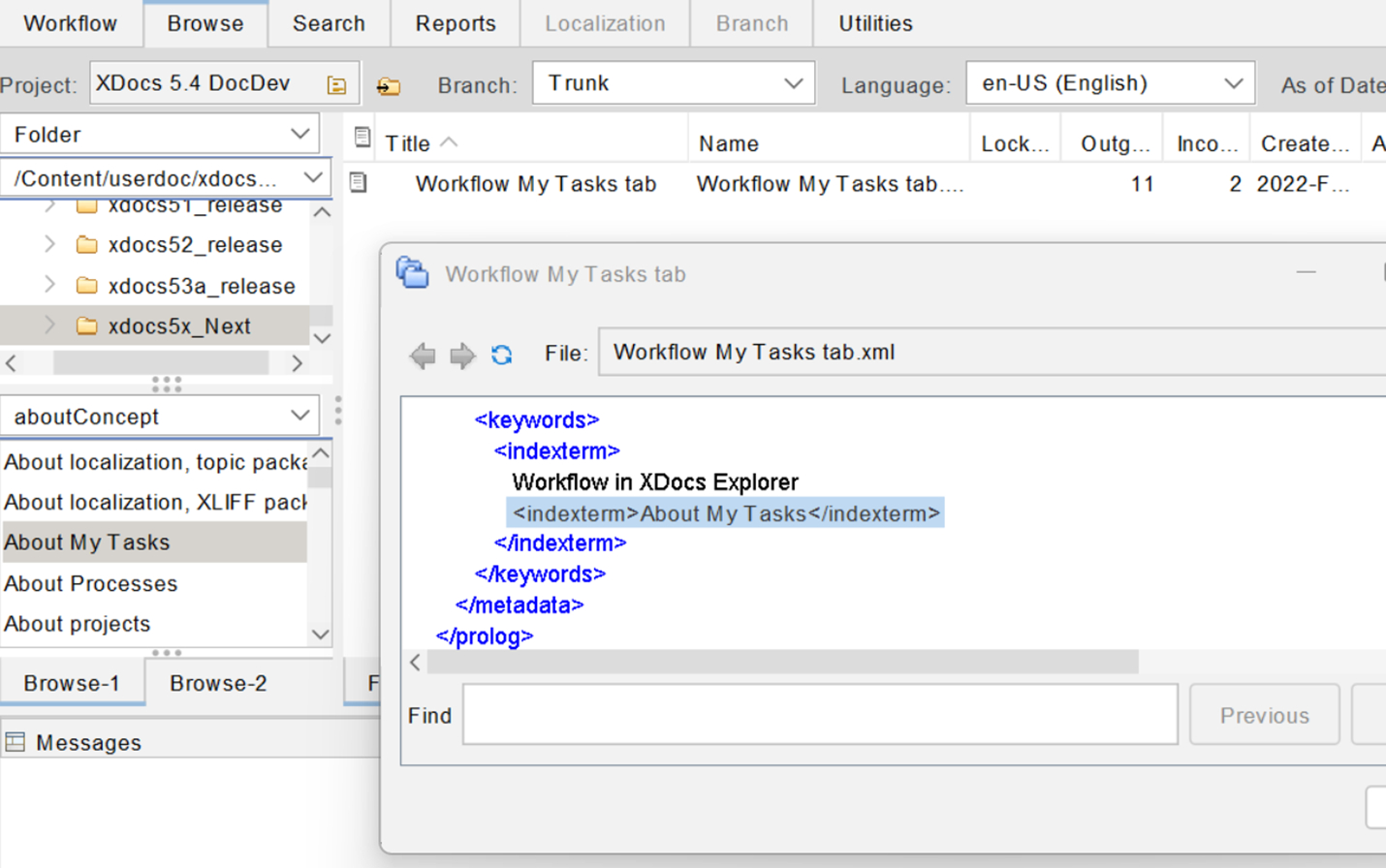
Information Architecture in XDocs
One structure across the content lifecycle
Shared metadata and content rules support the teams who create, review, manage and deliver your documentation.
Structured content / AI-ready foundations
A maintained source for connected knowledge
Reusable structure and consistent metadata give knowledge shape and context. Content rules help teams maintain that source, providing a foundation for connected AI initiatives.
AI outcomes depend on content quality, retrieval and the tools you connect.
Questions about information architecture
Practical answers for your team
Where can XDocs metadata be used?
Configured taxonomies and metadata can be used across authoring, reviews, content management, localization, release management and delivery.
Can XDocs enforce content rules?
Information architects can configure specialized schemas and Schematron rules for system users, then update those files as requirements change.
How are different content outputs supported?
Conditional processing, presentation configuration and publishing plugins help manage profiles for different products, publication types and business audiences.
Related resources
Explore supporting guides and customer stories
Explore information architecture in XDocs
Contact Bluestream
Tell us a little about your team and what you’d like to achieve. If you’re requesting a demo, mention the product or challenge you’re interested in.
Read our Privacy Policy for information about how Bluestream handles your data.