
Practical AI adoption

How AI Is Transforming Technical Writing and How to Stay Ahead

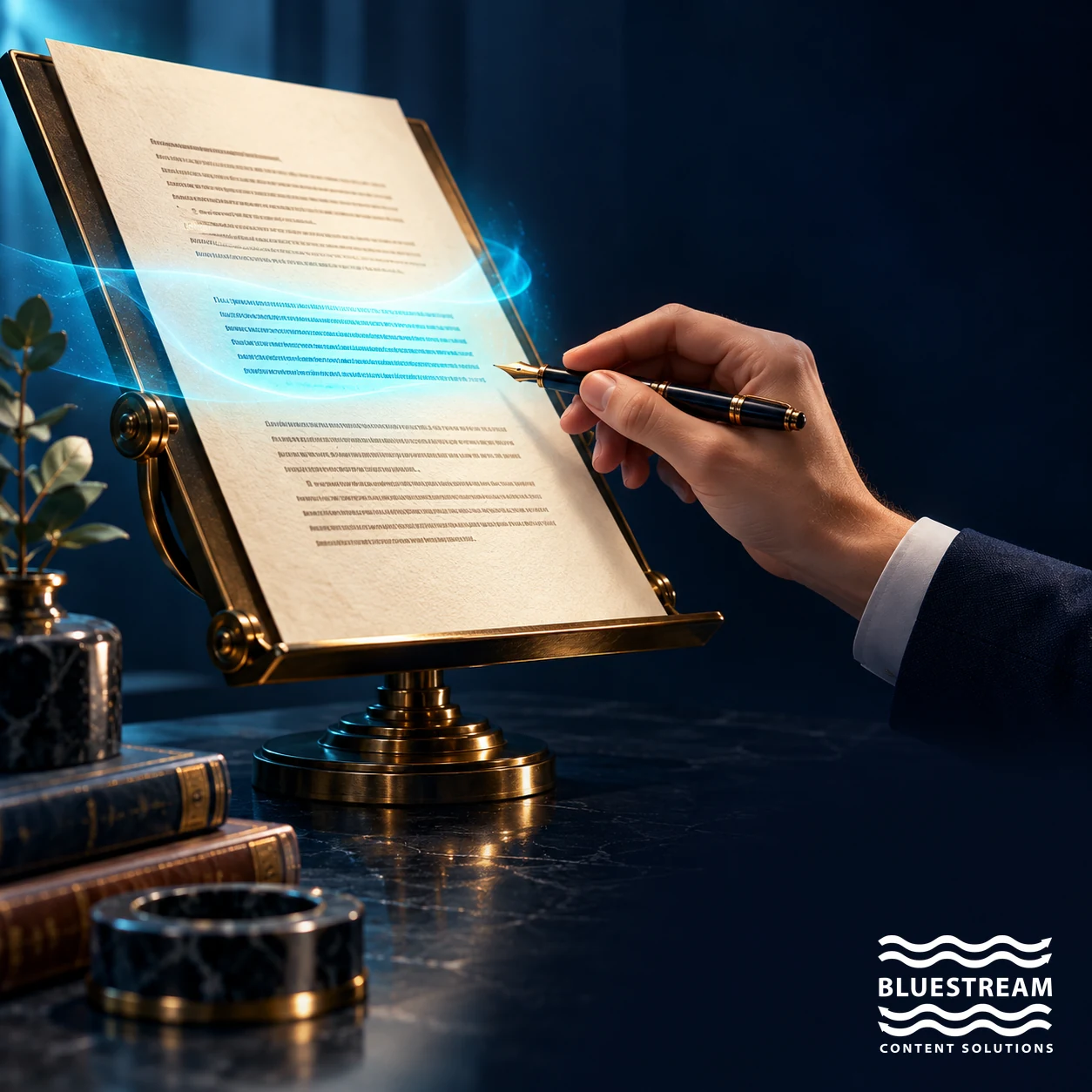
A writer reviews a manuscript illuminated by a cyan ribbon, symbolizing human-led AI-assisted documentation.

Choose one workflowVerify the evidenceMeasure reviewed results

AI is changing technical writing by making some drafting, analysis, and editing tasks easier to start. It can turn rough notes into an outline, suggest questions for a subject matter expert, or help compare two versions of a specification. The important question for a documentation team is where those capabilities improve a real workflow.

The answer depends on review effort as much as generation speed. A draft produced in seconds is useful only if the team can verify its facts, preserve its technical meaning, and manage it through the normal content lifecycle. This guide focuses on practical changes writers can make now.

What AI changes in day-to-day writing

Several types of work make sensible evaluation candidates:

  • Preparing a first pass: reorganizing approved source material into a proposed topic outline.
  • Finding review questions: identifying unclear prerequisites, undefined terms, or possible contradictions.
  • Comparing content: suggesting which sections may be affected by a specification change.
  • Editing prose: proposing shorter sentences while preserving exact technical terms.
  • Explaining code: helping a writer understand a bounded example before a developer validates the explanation.

For example, ChatGPT supports document comparison and transformation, while GitHub describes Copilot’s coding-oriented assistance and limitations. These are starting points for a test, not evidence that every writing task should be automated.

Keep the source of truth visible

Ask for evidence alongside a proposed change. If an assistant says a setting is deprecated, the reviewer should be able to locate that statement in an approved specification or release record. A model’s confident wording is not a substitute for product evidence.

Where writers still need to exercise judgment

Technical writers decide what a reader needs to accomplish, which details are missing, and whether an explanation is usable. These decisions require product understanding and direct collaboration with the people who build and support it.

AI output can introduce errors, omit exceptions, or combine details from incompatible releases. The NIST Generative AI Profile provides a broader framework for assessing generative-AI risks. For documentation teams, a practical response is to assign responsibility for checking each kind of claim.

  • Engineering verifies behavior, supported parameters, and executable examples.
  • Writers check completeness, structure, terminology, and audience fit.
  • Relevant specialists review safety, legal, accessibility, or localization requirements.
  • The publishing owner confirms release status, applicability, and distribution.

These roles may overlap in a small team. What matters is that “AI-assisted” does not become an undefined exception to the review process.

Why structure and metadata help

A task topic with explicit prerequisites and an expected outcome is easier to review than a long paragraph mixing explanation and instructions. Product and version metadata also help a retrieval system select appropriate sources.

DITA supplies a structured model for topics and maps, including metadata mechanisms described by OASIS. That structure can support AI-assisted work when the toolchain preserves it. It does not automatically make generated content accurate or make arbitrary content assembly safe.

A CCMS can manage approved topics, revisions, and reuse. A delivery layer can expose those topics to readers or other applications. If AI-generated material enters that workflow, it should arrive with an owner, a review state, and traceable sources.

Run a small, measurable pilot

1. Choose one recurring task

Start with something bounded, such as drafting release-note summaries from approved change descriptions. Avoid selecting the most safety-critical procedure as your first experiment.

2. Establish a baseline

Record how long the task normally takes, including review and corrections. Collect a few representative examples, including difficult cases. Define what a reviewer must accept before the result is useful.

3. Give the tool clear boundaries

Specify the audience, product version, source material, approved terms, output structure, and facts it must not infer. Ask it to flag missing information. Keep confidential data within your organization’s approved tools and policies.

4. Compare reviewed results

Measure total effort, factual corrections, omitted information, and usability. Retain the original sources and review findings so the team can explain why a change was accepted.

5. Expand only when the result holds up

If review time cancels the drafting benefit, narrow the task or change the approach. A useful pilot may conclude that AI is better at preparing questions than producing publishable prose.

Build the skills that support the workflow

Writers benefit from learning how prompts, retrieval, and evaluation work, but product knowledge remains essential. Practice reading source specifications, testing procedures, designing reusable topics, and interpreting search or support feedback.

For tool-specific options, see the reviewed AI tools shortlist. For longer-term role development, see the future of technical writing in an AI-driven world.

AI adoption is most useful when it improves the reader’s outcome and the team’s ability to maintain the content. A clear procedure that survives technical review matters more than a larger volume of generated text.

Frequently asked questions

Will AI replace technical writers?

It can automate parts of the work, and roles may change. No tool can guarantee employment outcomes. Product understanding, evidence checking, information architecture, and cross-functional judgment remain important responsibilities for documentation teams.

Do we need a new CCMS before trying AI?

No. A bounded pilot can use your current workflow. Evaluate a CCMS when revision control, reuse, metadata, or review coordination is a persistent problem that your existing tools cannot handle well.

What should we measure first?

Measure the time required to reach an accepted result, plus factual errors and missing information. Drafting speed alone can hide a larger review burden.

Can we let AI update shared topics automatically?

Shared topics can affect many outputs. Begin with proposed changes, impact analysis, and normal approval. Any later automation needs explicit boundaries, tests, and a reliable way to recover from errors.

Contact Us

Sign-up for the latest Bluestream News

Close