
Product announcement · February 2025
One destination for the technical knowledge your users need.
XDelivery brings documentation from different sources and formats into a unified delivery experience. This February 2025 announcement introduced a new and improved standalone version of a solution Bluestream had been deploying since 2012.
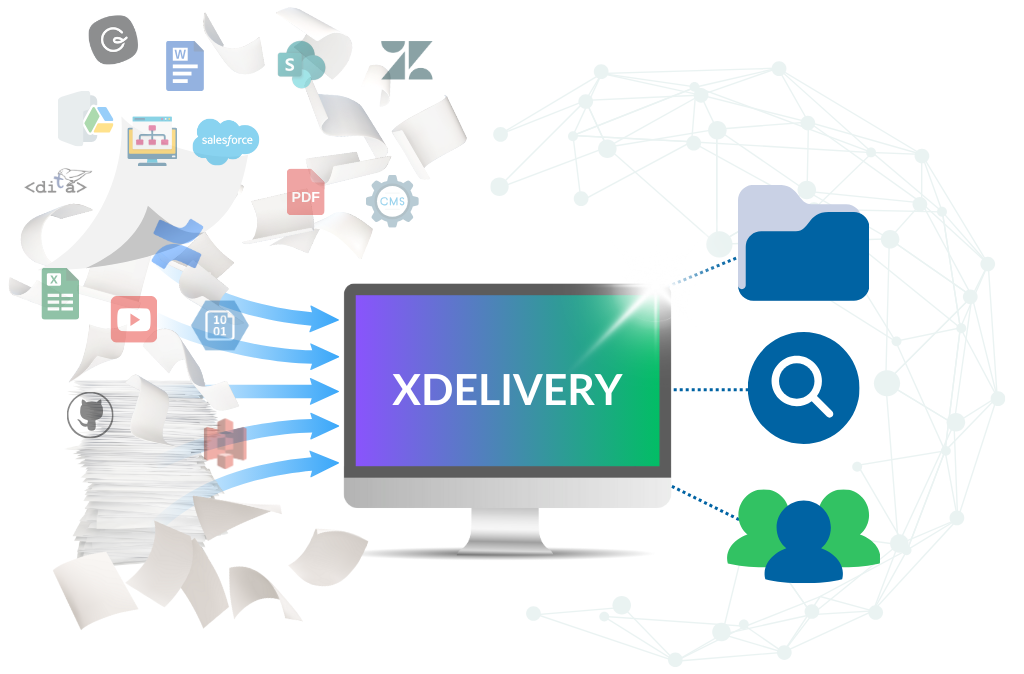
The delivery challenge
Bring the answer closer to the user
A service guide, an instructional video and a technical drawing may all help solve the same problem. When they live in separate systems, finding the right combination becomes work for the customer.
XDelivery provides a place to organize those assets, enrich them with metadata and make them available to the audiences that need them.
A portal built around diverse content
The original release described XDelivery as a standalone documentation delivery solution with tools to import, manage and publish technical content. Its purpose is to make existing knowledge easier to reach, while supporting structured content and DITA where those are part of the organization’s workflow.
Content does not have to become one file type to become part of one experience. The announcement covered PDF, HTML, video and downloadable files such as ZIP archives for wiring diagrams. Bluestream’s current XDelivery product overview also describes delivery of technical drawings and other binaries alongside DITA content.
That flexibility is important during gradual change. A team can define how it wants users to find information while planning which content needs restructuring, which assets can remain in their existing formats and how each source will be maintained.
Find · Understand · Use
Metadata makes a collection navigable
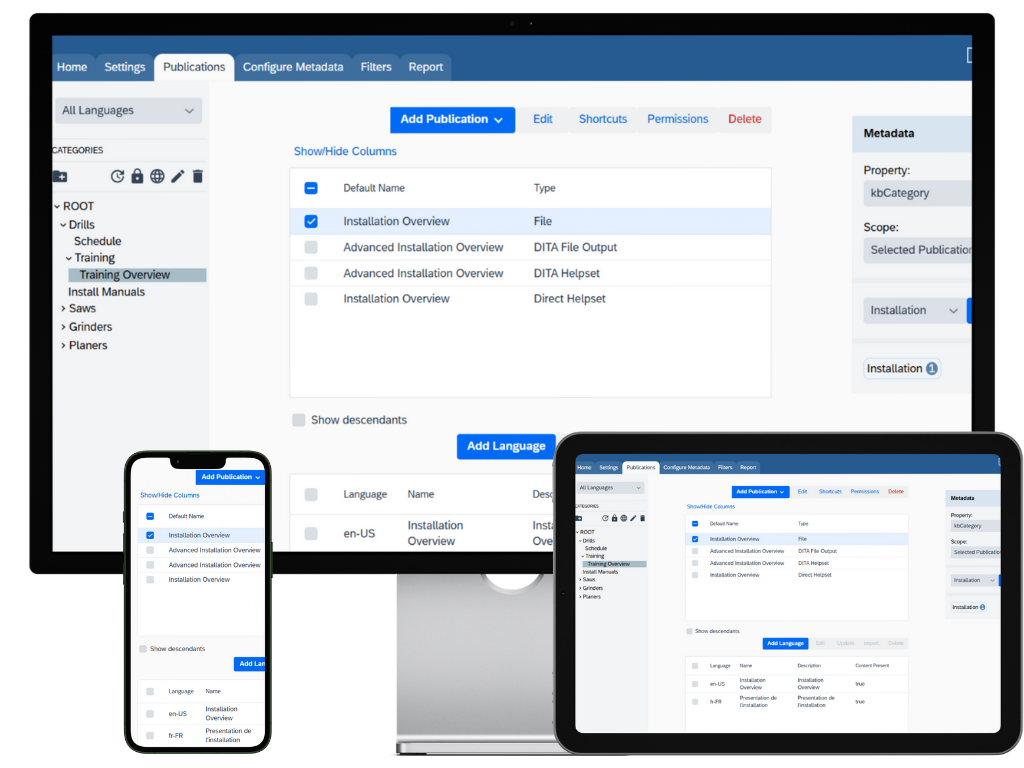
The release introduced custom metadata at both the group and individual-asset level. Combined with faceted and federated search, that gives teams ways to help readers narrow a large collection to relevant information.
For example, a documentation team might plan filters around product, language, document type or release. The useful choices depend on its users and content model. The project should establish consistent values, ownership and a process for maintaining them.
Links between documents can then connect the steps in a task: from a user guide to a troubleshooting topic, or from a procedure to a supporting drawing. A successful portal gives people a clear path through the knowledge they need.
Reach the right audience
Control access. Support the journey.
The announced permission model allows teams to decide which groups of users can see particular sets of content. Multilingual support enables delivery of translated content across markets.
These capabilities need an implementation plan. Identify the audiences, agree the access rules, confirm how identity will be managed and test the experience for each group. Review language coverage and release status as part of the same process.
Connect delivery to the wider content environment
The 2025 announcement described Salesforce integration and headless delivery to third-party sites and applications. It also outlined AI integration possibilities for summarization, localization and chatbots.
Those are project capabilities to scope and validate. Confirm the required system versions, APIs, connector availability, licensing and security arrangements before treating an integration as ready to deploy. For AI-assisted experiences, agree how sources, permissions and outputs will be checked, including human review where accuracy matters.
XDelivery and XDocs DITA CCMS address related parts of the content lifecycle. XDocs supports the authoring and management of structured content; XDelivery focuses on the experience of finding and consuming published information.
Plan a focused first release
The original announcement described deployments in as little as two weeks. Treat that as a potential project scenario rather than a fixed implementation promise. Content preparation, integrations, access requirements and review cycles can all affect the schedule.
- Choose one audience and a clear task. Establish what the first portal release must help that audience accomplish.
- Inventory the source material. Identify ownership, formats, duplicates and content that is no longer approved.
- Define metadata and access. Test the labels and permissions against real content before expanding the scope.
- Validate the user journey. Ask representative users to find information, follow links and complete realistic tasks.
That gives the team a practical basis for evaluating findability and planning the next stage. For a related discussion, explore the unified support portals webinar archive.
Historical announcement published February 14, 2025. The product capabilities described here come from that announcement, with links to Bluestream’s current product information. Deployment timelines, commercial terms and integration scope require project-specific confirmation.