Right to Repair Readiness

Right to Repair Readiness

Right to Repair is changing the way manufacturers think about product support, service, and customer access to information. What was once treated as an internal service process is increasingly becoming part of the customer experience, compliance strategy, and long-term product lifecycle.

For manufacturers, the conversation is often framed around parts availability, repair tools, and service access. Those elements matter, but they are only part of the picture. Without clear, accurate, and accessible documentation, repair access does not truly work.

Right to Repair readiness starts with documentation.

Right to Repair Is About More Than Parts

When people talk about Right to Repair, they often focus on whether users can buy replacement parts or access repair tools. But even with the right part in hand, a repair can still fail if the user cannot find the correct instructions.

Repair requires context. Users need to understand what the part does, how it fits into the system, what precautions apply, and which procedure should be followed. This is especially important in manufacturing environments where products are complex, configurable, and often safety-critical.

Documentation is what turns repair access into practical repair capability.
Why Documentation Access Matters

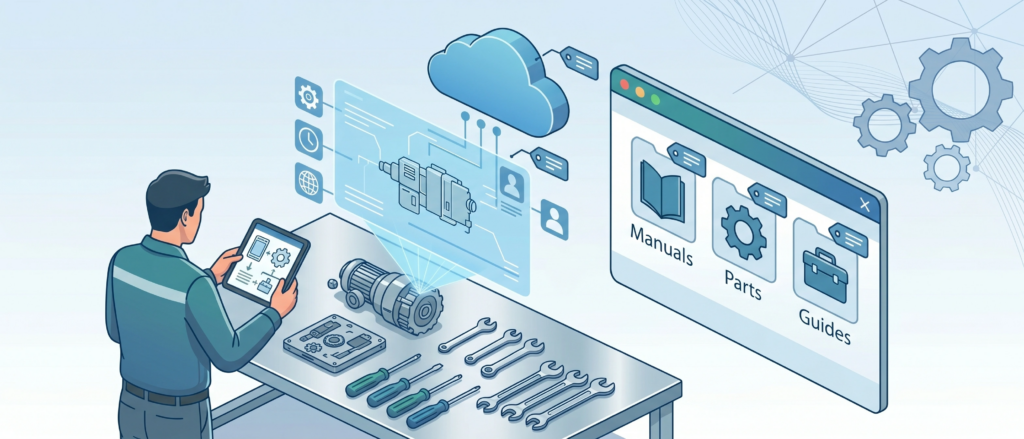
Manufacturers may already have repair documentation, service manuals, troubleshooting guides, and parts catalogues. The problem is that this information is often difficult to find or scattered across multiple systems.

If documentation is buried in large PDFs, stored in disconnected file repositories, or written only for internal experts, it may not support Right to Repair effectively.

Accessible repair documentation should be:

• Easy to find
• Accurate and current
• Appropriate for the user’s role
• Specific to the product or configuration
• Clear enough to support safe repair

Availability alone is not enough. Documentation must be usable.

Right to Repair Readiness: Why Manufacturers Need a Documentation Strategy Now | For Manufacturers | Documentation | Image

The Challenge of Supporting Different Repair Audiences

Right to Repair expands the audience for technical documentation. Information that was once intended primarily for internal service teams may now need to support customers, independent technicians, partners, dealers, or field service providers.

Each audience may require a different level of detail. A trained technician may need advanced diagnostic information, while a customer may need simpler maintenance guidance. A partner may require repair procedures tied to a specific product model or region.

This creates a challenge for manufacturers. How do you provide access without overwhelming users or exposing information that is not relevant to them?

The answer lies in structured documentation and controlled delivery.

Right to Repair Readiness: Why Manufacturers Need a Documentation Strategy Now | For Manufacturers | Documentation | GIF Banner

Structured Documentation Makes Repair Information Scalable

Traditional documentation approaches often rely on large manuals and duplicated documents. This becomes difficult to manage when products have multiple models, variants, and regional requirements.

Structured documentation works differently. Content is created in smaller, reusable topics such as procedures, warnings, troubleshooting steps, and parts references. Metadata can then define where each topic applies.

This makes it easier to deliver the right repair information to the right audience without creating separate versions of every manual.

For example, a single repair procedure can be reused across multiple product models, while metadata controls which version appears for a specific configuration.

Why Metadata Is Critical for Right to Repair

Metadata is one of the most important parts of a Right to Repair documentation strategy.

It helps identify which content applies to a product, model, version, region, language, audience, or repair scenario. Without metadata, users may receive too much information, outdated information, or information that does not apply to their situation.

Strong metadata helps documentation systems filter and deliver repair content more precisely. It also supports better search, better governance, and more reliable AI-powered answers.

In a Right to Repair environment, metadata is not just an organizational tool. It is a control layer.

Before we go further, this is exactly the shift we unpacked in our recent video on Agentic AI: why it is not just “AI for documentation,” but a different way of thinking about content operations, governance, knowledge structures and the role of documentation teams in an agent-driven SDLC…

Digital Portals Improve Repair Documentation Access

A self-service documentation portal can play a major role in Right to Repair readiness. Instead of forcing users to navigate disconnected files, a portal provides a centralized place to search, filter, and access repair information.

Modern documentation portals can support:

• Product-specific navigation
• Search by symptom, part number, or task
• Role-based access
• Mobile-friendly viewing
• Links between procedures, parts, and warnings

This improves the user experience and reduces the risk of users following the wrong procedure or relying on outdated content.

AI Can Help Users Find the Right Repair Information

AI-powered search and chat can make repair documentation easier to use, especially for users who do not know exact terminology.

A user might describe a problem in plain language, while the documentation uses formal technical terms. AI can help bridge that gap by interpreting intent and retrieving relevant topics.

However, AI only works well when the content behind it is structured, accurate, and governed. If the documentation is duplicated, outdated, or poorly organized, AI may surface the wrong answer.

For manufacturers, AI should be seen as an enhancement to a strong documentation foundation, not a shortcut around it.

Right to Repair Also Requires Governance

Providing access to repair documentation does not mean publishing everything without control. Manufacturers still need to manage safety, compliance, intellectual property, and user suitability.

Documentation governance ensures that repair information is reviewed, approved, version-controlled, and delivered appropriately.

This includes deciding:

• Which content is public
• Which content is restricted to trained technicians
• Which procedures require safety warnings
• Which documents are obsolete
• Which versions apply to specific products

Good governance protects both the user and the manufacturer.

Documentation Teams Are Central to Right to Repair

Right to Repair is often seen as a legal, operational, or service issue. But documentation teams play a central role in making it work.

Technical writers and content teams are responsible for turning complex product knowledge into clear, usable repair information. They understand how to structure procedures, apply metadata, manage reuse, and write for different audiences.

As Right to Repair expectations grow, documentation teams will become even more important to product support strategy.

Final Thoughts

Right to Repair is not just about opening access to parts and tools. It is about helping users repair products safely, accurately, and confidently.

That requires documentation that is structured, searchable, current, and appropriate for each audience.

Manufacturers that invest in documentation readiness now will be better prepared to support repair access, reduce support burden, improve customer trust, and meet evolving expectations around product serviceability.

In the Right to Repair era, documentation is not an afterthought. It is the foundation.

Want to See Metadata Strategies in Action?

Want to see how a modern documentation portal can support Right to Repair and improve access to your technical content?

Explore how XDelivery helps manufacturers deliver structured, searchable, and AI-ready documentation across all products and user groups.

👉 https://bluestream.com/products/xdelivery/

Q&A: Right to Repair and Documentation

What does Right to Repair mean for manufacturers?

Right to Repair means manufacturers may need to provide greater access to repair information, parts, tools, and service guidance so customers, partners, and independent technicians can maintain and repair products.

Why is documentation important for Right to Repair?

Documentation provides the instructions, safety guidance, troubleshooting steps, and parts information needed to complete repairs correctly. Without usable documentation, repair access is limited.

What kind of documentation supports Right to Repair?

Useful repair documentation includes service procedures, troubleshooting guides, parts catalogues, safety warnings, maintenance instructions, and configuration-specific repair information.

How can manufacturers make repair documentation easier to access?

Manufacturers can use structured content, metadata, and self-service documentation portals to make repair information searchable, filterable, and available to the right users.

Can AI help with Right to Repair documentation?

Yes. AI-powered search and chat can help users find repair information faster, especially when they describe issues in natural language rather than exact technical terms.

Why does governance matter for repair documentation?

Governance ensures that users access approved, current, and appropriate repair information. This helps reduce risk, protect safety, and maintain compliance.

Facebook
Twitter
LinkedIn

Search

Categories

Empowering Organizations with Documentation Efficiency

At Bluestream, we are committed to providing exceptional technology and expertise to help organizations overcome their product documentation challenges and achieve their goals efficiently. Partner with us to unlock the full potential of your documentation and enhance your overall productivity.

Sign-up for the latest Bluestream News

Close