

Advanced Metadata Strategies in an AI World – How Structured Authoring Shapes LLM Understanding
As AI becomes more deeply embedded in documentation workflows, metadata has moved from a supporting role to a central one. What was once used primarily for filtering, reuse, and publishing logic is now foundational to how large language models understand, retrieve, and reason over content.
For teams using structured authoring approaches such as DITA, this shift presents both an opportunity and a responsibility. Metadata is no longer just for humans and publishing engines. It is now a critical signal for AI systems.
Metadata Is How AI Understands Context
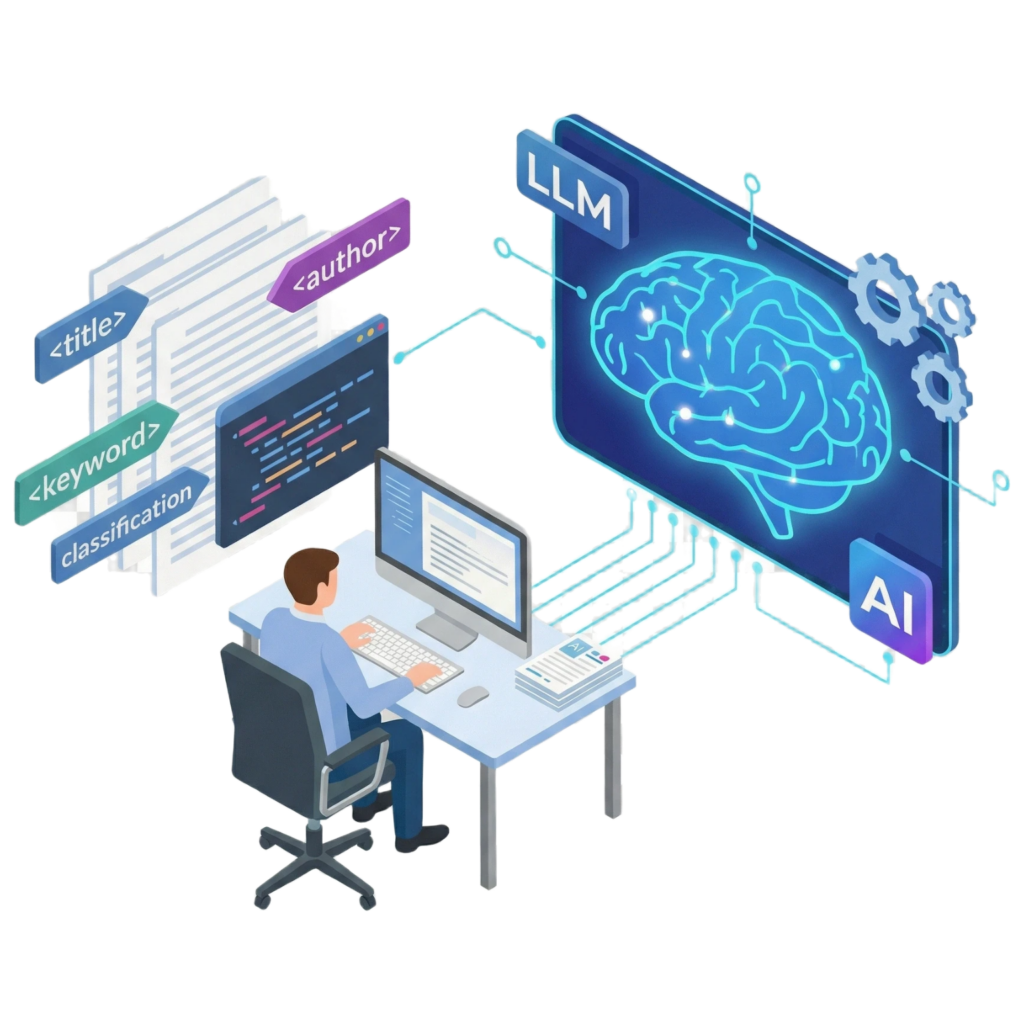
Large language models do not inherently understand your documentation. They rely on signals to determine relevance, intent, boundaries, and meaning. Metadata provides those signals.
Metadata helps AI systems understand:
- What type of content a topic represents, such as a procedure, concept, or warning
- Who the content is intended for, including role or experience level
- When the content applies, such as product version or lifecycle state
- How the content should be interpreted, including priority or risk
When documentation is enriched with consistent, meaningful metadata, AI systems gain the ability to distinguish between concepts that may look similar in plain text. A procedure is not the same as a reference. A safety warning is not the same as a configuration step. Metadata communicates those distinctions clearly.
Without metadata, AI is forced to guess based on surrounding language. With metadata, it can reason with structure.
Structured Authoring Creates Predictable Meaning
Structured authoring systems such as DITA impose discipline on content creation. Topics have defined types, clear purposes, and explicit relationships. Metadata extends this structure by adding descriptive and contextual attributes.
Together, structured authoring and metadata create predictable meaning. This predictability is essential for AI systems that need to retrieve the right content at the right time.
For example, when content is tagged with audience, product, task type, or lifecycle stage, an AI assistant can limit responses to what is appropriate for the user’s situation rather than pulling from the entire documentation set.
How Metadata Affects LLM Retrieval and Responses
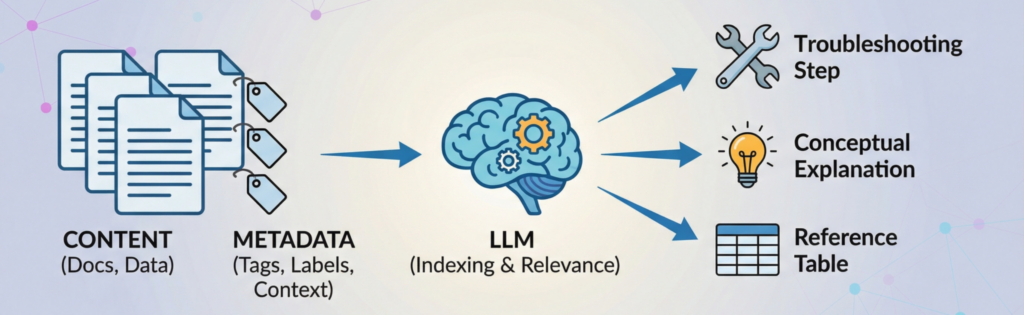
When LLMs are used for documentation search, chat, or summarization, metadata plays a direct role in shaping outcomes.
Metadata influences which content is indexed, how it is grouped, and how relevance is calculated. It helps determine whether an AI response surfaces a troubleshooting step, a conceptual explanation, or a reference table.
Well-designed metadata also helps prevent undesirable results. By clearly identifying deprecated content, internal-only information, or safety-critical instructions, teams can reduce the risk of AI presenting incorrect or inappropriate answers.
In short, metadata does not just improve retrieval. It governs behavior.
Metadata as a Control Layer for AI
As AI systems become more autonomous, metadata increasingly acts as a control layer.
Metadata can be used to define boundaries for what AI is allowed to access, combine, or present. It can indicate which content is authoritative, which is supplementary, and which should never be surfaced directly to end users.
For documentation teams, this is a critical shift for Advanced Strategies in an AI World. Metadata becomes part of governance, not just organization. It helps ensure AI-assisted experiences remain accurate, compliant, and aligned with business intent.
Moving Beyond Basic Metadata
Many documentation teams already use basic metadata such as product name, version, or language. Advanced metadata strategies go further.
Advanced metadata may describe task intent, user role, equipment state, regulatory relevance, or applicability conditions. It may also encode relationships between topics, such as prerequisites, dependencies, or follow-on actions.
This richer metadata enables AI systems to reason more effectively across content sets. Instead of returning isolated answers, AI can guide users through logical paths based on structured relationships.
The Role of Metadata in AI-Ready Documentation Delivery
AI-ready documentation is not just about feeding content into a model. It is about preparing content so AI can use it responsibly and effectively.
Structured content enriched with metadata supports more precise search, more accurate summarization, and more relevant conversational responses. It also allows documentation platforms to combine traditional search with AI-powered assistance in a controlled way.
In this model, metadata enables AI to work with documentation rather than simply on top of it.
Designing Metadata with AI in Mind
Documentation teams designing metadata strategies today should consider future AI use cases, even if they are not fully implemented yet.
Questions worth asking include:
- What attributes help distinguish similar content types
- Which metadata indicates authority, risk, or applicability
- How can metadata guide AI toward the right level of detail
- What signals help prevent misuse or misinterpretation
Answering these questions early helps teams avoid retrofitting metadata later under pressure.
Why This Matters for Technical Writers and Content Architects
Technical writers have always structured content for clarity and reuse. In an AI-driven world, that same discipline now shapes how machines interpret and deliver information.
Metadata gives technical writers influence over AI behavior without writing code. It allows content teams to shape AI responses indirectly, through structure and context rather than prompts alone.
This elevates the role of documentation teams from content producers to information architects for intelligent systems.
Final Thoughts
Advanced metadata strategies are no longer optional for teams working with AI. They are a prerequisite for trustworthy, scalable, and effective AI-assisted documentation.
Structured authoring provides the framework. Metadata provides the meaning. Together, they enable AI systems to interact with documentation in ways that are accurate, contextual, and useful.
As LLMs continue to evolve, the quality of their outputs will increasingly reflect the quality of the metadata behind the content they consume. Documentation teams that invest in metadata today are laying the foundation for smarter systems tomorrow.
Explore our breakdown of the top 10 ways structured content prepares your docs for AI…
Want to See Metadata Strategies in Action?
Looking to modernize your documentation process with AI?
Let’s connect. Contact Bluestream to learn how our native integration with oXygen XML Editor/Author can elevate your structured authoring environment. From authoring to review to multichannel publishing, we support the workflows that power your content lifecycle.
FAQ: Advanced Metadata, Structured Authoring, and AI
What is metadata in the context of AI and documentation?
In AI-enabled documentation, metadata is structured information that describes content beyond its visible text. It tells systems what a topic is about, who it is for, how it should be used, and when it applies. For AI and large language models, metadata provides critical context that helps determine relevance, accuracy, and intent.
How does metadata affect large language models (LLMs)?
Metadata influences how LLMs retrieve, group, and prioritize content. It helps models distinguish between different content types such as procedures, concepts, warnings, or reference material. When metadata is well designed, LLMs can return more accurate, appropriate, and context-aware responses instead of relying solely on language patterns.
Why is structured authoring important for AI-ready documentation?
Structured authoring ensures content follows consistent patterns and clear intent. When combined with metadata, it creates predictable meaning that AI systems can understand and reason over. This makes it easier for AI to retrieve the right information and reduces ambiguity in responses.
What is the difference between basic and advanced metadata?
Basic metadata typically includes attributes like product name, version, or language. Advanced metadata goes further by describing audience, task intent, applicability conditions, risk level, lifecycle state, or relationships between topics. This richer context allows AI systems to guide users more intelligently through content.
Can metadata help control what AI shows to users?
Yes. Metadata can act as a control layer by identifying authoritative content, deprecated information, internal-only material, or safety-critical instructions. This helps prevent AI systems from surfacing incorrect, outdated, or inappropriate content to users.
Do technical writers need to change how they write for AI?
The fundamentals of good technical writing remain the same, but technical writers should think more deliberately about structure and metadata. Writing with clear intent, consistent topic types, and meaningful metadata helps AI systems use content responsibly and effectively.
Is metadata only useful for AI chat and search?
No. While metadata plays a major role in AI-powered search and chat, it also supports reuse, publishing logic, personalization, analytics, and governance. AI simply amplifies the importance of metadata that documentation teams already rely on.
When should documentation teams start designing metadata for AI?
As early as possible. Designing metadata with AI in mind from the start is far easier than retrofitting it later. Even if AI use cases are still emerging, metadata created today will shape how future systems interact with content.
