Seven questions.
A changing profession.
A look at how documentation professionals described AI leadership, workflows and delivery during 2025.
Start here
Technical documentation teams are navigating AI adoption, evolving roles and a future with more than one way to deliver information.
In 2025, artificial intelligence is becoming an increasingly visible part of technical documentation workflows. While much of the broader conversation around AI focuses on automation and workforce reduction, the experience of documentation teams tells a more nuanced story.
To better understand how AI is being adopted, led, and perceived within documentation organizations, we analyzed a series of LinkedIn polls conducted throughout 2025. These polls captured input from technical documentation professionals on topics ranging from AI leadership and staffing impact to tooling preferences, content delivery formats, and the future role of chatbots in documentation.
Taken together, the results reveal several consistent themes. Technical documentation teams are emerging as active leaders in AI initiatives rather than passive adopters. AI is reshaping how documentation work is performed more than it is reducing headcount. Organizations continue to struggle with understanding and trust around AI, even when budget is available. At the same time, respondents expect the future of documentation to be hybrid, combining structured documentation portals, chatbots, and multiple delivery formats.
This report summarizes those findings and highlights what they suggest about the evolving role of documentation teams in an AI-enabled future.
Leadership
What respondents said
Published values total 96%. Shown unchanged.
Bluestream’s original interpretation
Responses show that AI initiatives are frequently led by teams directly responsible for content creation and knowledge management. Documentation teams are not just supporting AI adoption but are actively driving it, often in close collaboration with IT. This reflects a shift where AI is viewed as a core documentation and support capability rather than a peripheral technical experiment.
Headcount
What respondents said
Percentages reproduced from the original report.
Bluestream’s original interpretation
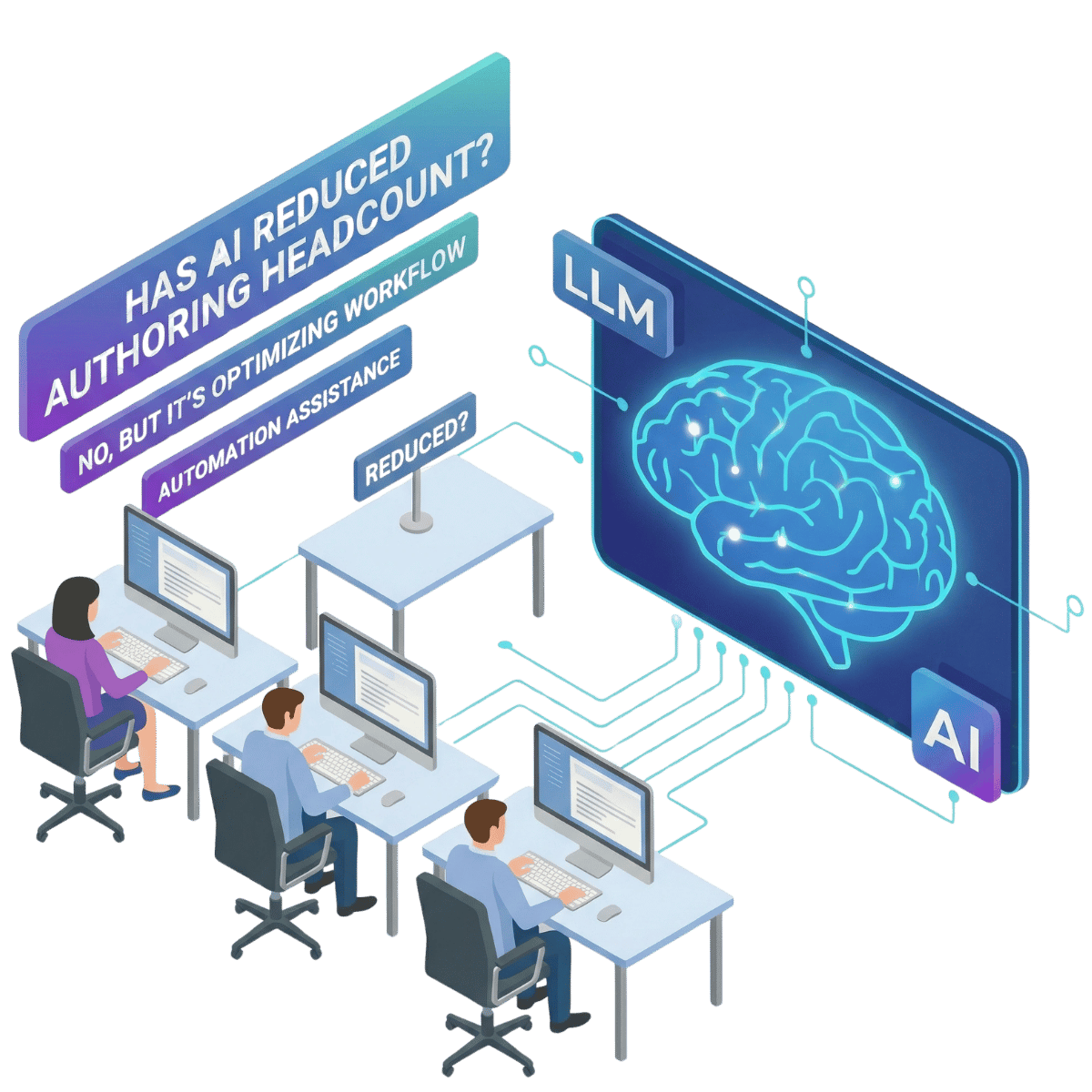
In 2025 nearly half of all organizations who responded had reduced headcount.
This shows that AI is reshaping how documentation work is performed, with evolving responsibilities and productivity expectations.
Authoring tools
What respondents said
Published values total 101%. Shown unchanged.
Bluestream’s original interpretation
oXygen Desktop Authoring remains preferred for structured content like XML/DITA due to its superior customization, matching the 50% preference in the survey.
Performance, advanced features, and control/security each at 17% highlight its edge over web/cloud alternatives for complex, offline workflows.
Adoption barriers
What respondents said
Published values total 101%. Shown unchanged.
Bluestream’s original interpretation
These results show the greatest barriers to AI adoption are uncertainty and trust rather than funding. Many writers feel that organizations struggle to clearly define how AI should be used in support and documentation workflows.
Limited executive sponsorship further slows progress, even when budgets are available.
Portals & chatbots
What respondents said
Percentages reproduced from the original report.
Bluestream’s original interpretation
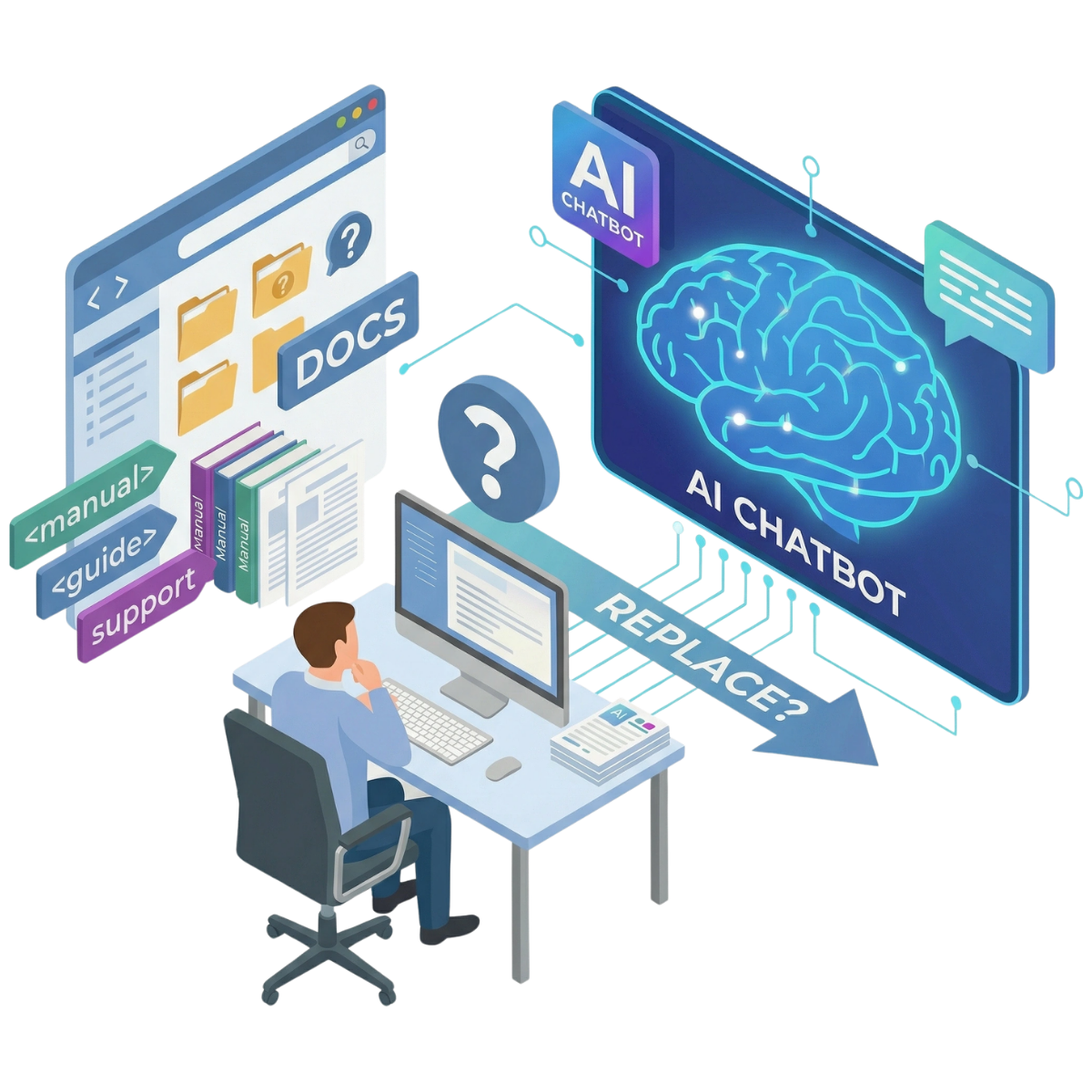
Tech doc writers overwhelmingly expect chatbots and documentation portals to coexist. Chatbots are seen as an interface that can improve access and discovery, while structured documentation remains essential for accuracy, depth, and governance. The results reflect confidence in the enduring value of well maintained documentation.
PDF continues to be used (despite the obvious drawbacks of support delivered in this format.
Video is expensive to deploy and it makes sense that only a small percentage of users that have this as their main support format.
Publishing formats
What respondents said
Published values total 101%. Shown unchanged.
Bluestream’s original interpretation
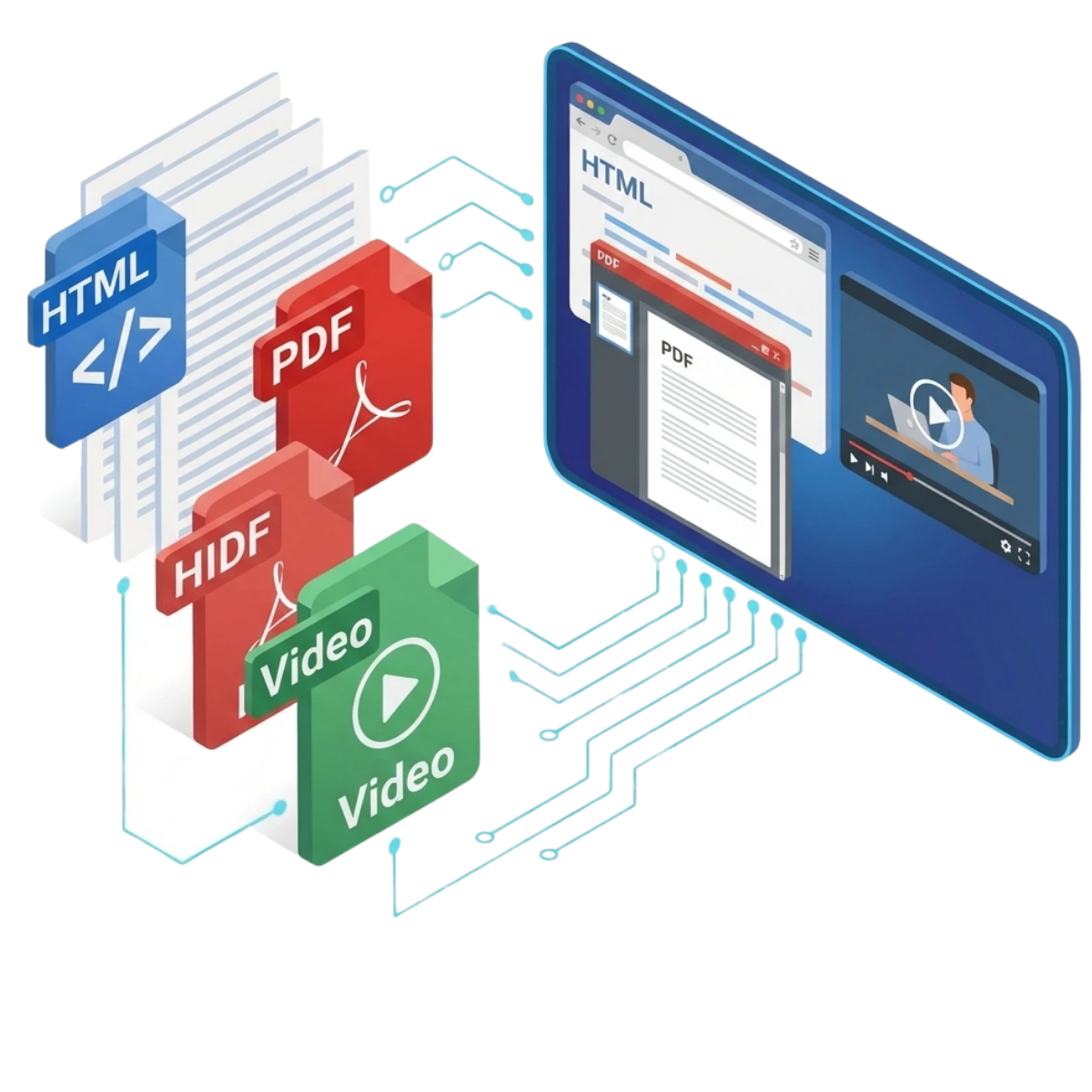
These results show most teams deliver content across multiple formats to meet varied user needs.
This reinforces the importance of structured content, reuse strategies, and tooling that can support consistent delivery across channels.
AI use cases
What respondents said
Percentages reproduced from the original report.
Bluestream’s original interpretation
Authoring assistance is by far the biggest use case- this makes sense as this capability is built into several editors and was released first into the market. Content conversion also has a significant AI use- it is an ideal fit for Ai and we expect AI to be used increasingly in content conversion projects as it is a cost effective and scalable approach.
Chatbots have been minimally deployed we expect that this is due to the relative complexity of deploying this capability currently. As time goes on we expect that this will increase as this capability is delivered by vendors of portal solutions.
Agentic AI use remains low - given its complexity to deploy it would align with our current viewpoint- In time we expect this to increase significantly as this is the most powerful capability for AI in documentation and will allow.
Agentic AI enhances support documentation projects by automating complex workflows, reasoning through tasks, and integrating with tools like content management systems. It goes beyond simple generation to plan, execute, and adapt actions such as updating docs based on code changes or user feedback.Although complex- this capability will deliver the most powerful outcomes when deployed and engineered correctly- it will be interesting to see if this is the year that agentic AI becomes more widely used in the marketplace.
Independent research · Added October 2026
Published research / Customer support / 2025
average increase in issues resolved per hour
5,172 customer-support agents studied
A 2025 study of 5,172 customer-support agents found that AI assistance increased issues resolved per hour by 15% on average, with results varying across workers. This provides context for AI-assisted work; it does not measure technical-writing productivity or validate these LinkedIn polls.
Erik Brynjolfsson, Danielle Li and Lindsey Raymond.
Generative AI at Work, The Quarterly Journal of Economics (2025) ↗
The original perspective
Bluestream’s concluding interpretation, preserved from the February 2026 report. Read alongside the evidence note above.
The 2025 LinkedIn poll results reveal that artificial intelligence is not replacing technical documentation teams — it is redefining and elevating them. Documentation professionals are emerging as leaders in AI initiatives, with half of AI projects driven directly by technical documentation teams and strong collaboration with IT. This signals a shift in which AI is viewed as a strategic content and support capability rather than a purely technical experiment.
While 45% of respondents reported some headcount reduction, the broader trend indicates that AI is reshaping roles and workflows more than eliminating them. Authoring assistance has become the dominant AI use case, improving productivity and accelerating content creation. Content conversion is also gaining traction as a scalable, cost-effective application of AI. More advanced implementations, such as chatbots and agentic AI, remain limited but are expected to grow as deployment complexity decreases and vendor capabilities mature.
Barriers to adoption are cultural rather than financial. Lack of understanding and skepticism are the primary obstacles, even when budgets are available. Limited executive sponsorship further slows enterprise-wide implementation, highlighting the need for clearer strategy and governance around AI usage.
Looking ahead, documentation delivery is expected to remain hybrid. Most professionals believe chatbots and structured documentation portals will coexist, combining conversational access with governed, authoritative content. Multi-format publishing (HTML, PDF, video) remains standard practice, reinforcing the importance of structured content and reusable architectures.
Overall, the findings point to an AI-enabled future where documentation teams play a central strategic role — driving innovation, maintaining governance, and shaping how organizations deliver knowledge at scale.
From research to practice
If the challenges and opportunities outlined in this whitepaper resonate with your organization, Bluestream is here to help.
Whether you are looking to streamline technical documentation, improve content reuse, or better manage complex manufacturing information, our team has the expertise to support you. Get in touch with us to discuss your specific needs, explore tailored solutions, and learn how Bluestream can help you increase efficiency, reduce complexity, and future-proof your documentation strategy.
Explore more whitepapers ↗